
The best 6'8" players in NBA history sit at one of the most flexible heights the league has ever produced. At 6'8" you're tall enough to switch onto big forwards, quick enough to handle the ball in transition, and long enough to disrupt passing lanes from the wing. It's the modern positionless template — and the players below built entire Hall of Fame careers on its versatility. The height shows up repeatedly at the top of the statistical record: scoring titles, defensive awards, All-Star rosters, and championship rosters all feature 6'8" players in starring roles. What's striking isn't just that great players happen to be 6'8" — it's that 6'8" keeps producing greatness at a rate that no adjacent height can match.

Why 6'8" Is the Prototype
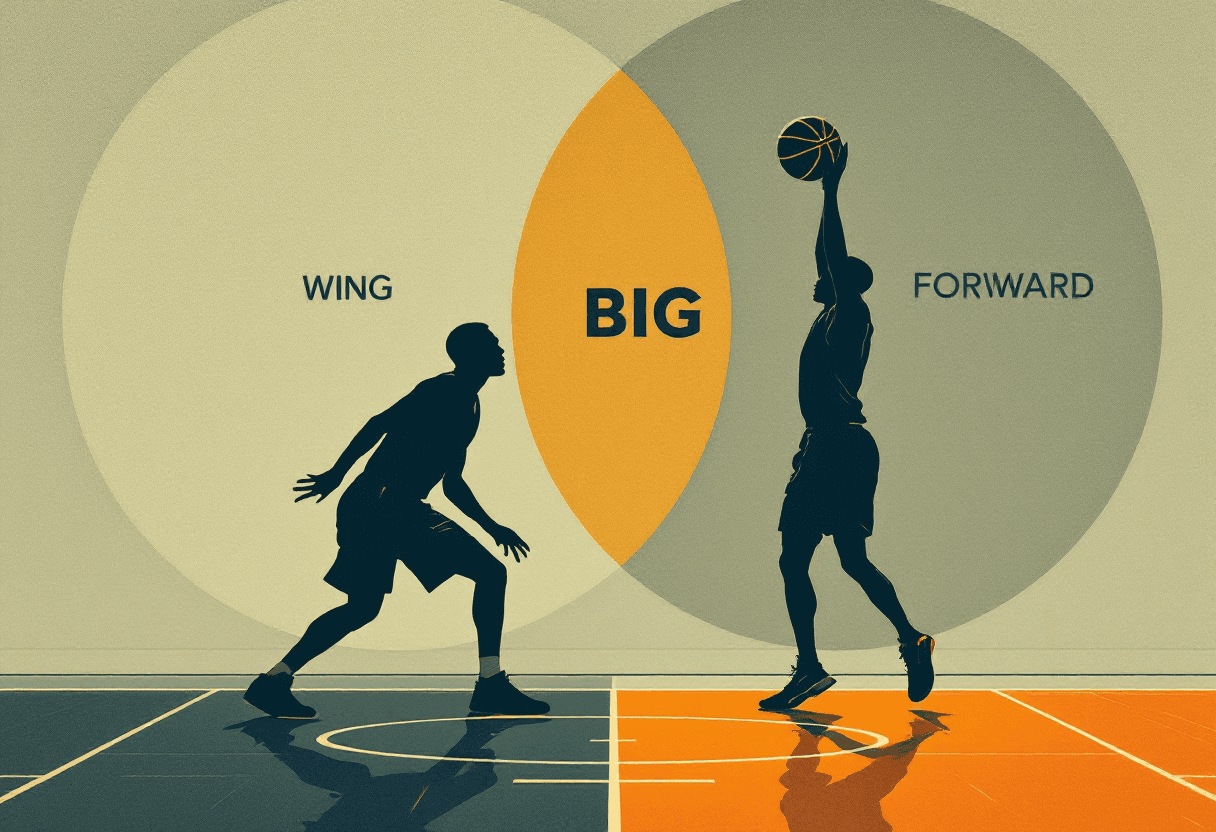
The NBA has spent decades searching for the perfect combination of size and skill. Centers too large to move laterally. Guards too small to guard forwards in the post. Point forwards — the 6'9" playmakers — who couldn't quite guard the perimeter. What 6'8" gives you is the sweet spot. It's three inches taller than the prototypical shooting guard, which means you can shoot over most wing defenders you'll encounter. It's three inches shorter than the prototypical power forward, which means you stay mobile enough to guard in space. The position-switching ceiling for a 6'8" player is genuinely unique — in the modern switch-everything defensive scheme, a 6'8" wing who moves well can plausibly guard every position from point guard to center on any given possession. That flexibility has made it the most coveted single measurement in the modern NBA.
Scottie Pippen — The Blueprint
The textbook 6'8" player. Pippen averaged 16.1 points, 6.4 rebounds, and 5.2 assists across 1,178 career games, made seven All-Star teams (1990, 1992–97), and won six championships alongside Michael Jordan in Chicago. His All-Defensive selections tell the story better than the box score: eight consecutive All-Defensive First Team nods, the longest such streak in NBA history. At 6'8" with elite lateral quickness, he could guard point guards on perimeter switches and track down bigger forwards in the post on the same defensive possession — back-to-back, without a rotation call. Pippen won the All-Star Game MVP in 1994, the same year Jordan was in baseball, proving the versatility extended to carrying an offense when the league's greatest player stepped away. The blueprint for every modern wing-forward — the guy who guards the other team's best player and still gets you 16 points — starts with Pippen's tape.
Tracy McGrady — The Explosive Peak
The most explosive 6'8" wing of his era. McGrady won back-to-back NBA scoring titles in 2002–03 (32.1 PPG) and 2003–04, made seven All-Star teams, and earned seven All-NBA selections. He moved like a guard and finished like a forward, using a long first step off the dribble and a feathery mid-range release to get to any spot on the floor. The 13-points-in-33-seconds game against San Antonio on December 9, 2004 — down ten with 33 seconds left, four straight made baskets including a game-winning three with 1.7 seconds remaining — is the snapshot, but the sustained peak is the real argument. McGrady averaged 28 or more points per game across three consecutive seasons while playing the wing at 6'8", a combination of volume scoring and size almost unprecedented at that position. He was inducted into the Naismith Memorial Basketball Hall of Fame as part of the Class of 2017.
Grant Hill — The Complete Player Cut Short
Before a severe ankle injury reshaped the second half of his career, Hill was among the most polished 6'8" players ever to lace them up. Over his first six seasons in Detroit, Hill accumulated 9,393 points, 3,417 rebounds, and 2,720 assists — a statistical combination matched at that stage of a career by only Oscar Robertson, Larry Bird, LeBron James, and Luka Doncic. His 1996–97 season — 21.4 points, 9.0 rebounds, 7.3 assists per game — made him the first player since Larry Bird in 1989–90 to average 20 points, 9 rebounds, and 7 assists in a single season. He was a seven-time All-Star, a five-time All-NBA selection, and the co-winner of the 1994–95 Rookie of the Year award (shared with Jason Kidd). The ankle injuries that began in 2000 robbed the league of what should have been a peak spanning another half-decade. The post-injury Phoenix era extended his career with graceful utility, but the pre-ankle Hill is one of the most dominant 6'8" stretches in NBA history. He was inducted into the Hall of Fame in 2018.
Dominique Wilkins — The Human Highlight Film
Before Pippen redefined the position defensively, Wilkins redefined it offensively. Standing 6'8" and listed at 215 pounds, Wilkins was the most electric scorer of the 1980s outside of Jordan, averaging 24.8 points per game across 1,074 career games with a 46.1% field-goal percentage and 81.1% from the line. He won the NBA scoring title in 1985–86 with 30.3 points per game, made nine All-Star teams, and earned seven All-NBA selections. His dunk contest performances — particularly the famous back-and-forth with Jordan in the 1988 contest, where Wilkins put up one of the most technically perfect performances in competition history — cemented a cultural legacy that outlasted the stats. The Naismith Memorial Basketball Hall of Fame inducted him in 2006. Wilkins played primarily for the Atlanta Hawks across his 15-year career, and the franchise retired his number 21 — proof of what a 6'8" scorer could become when he fully owned the position.
Carmelo Anthony — The Scoring Machine
The purest offensive instrument the 6'8" height has produced. Anthony averaged 22.5 points per game across 1,260 career games — good for fourth all-time at the time of his retirement — on 45.6% shooting from the field. He won the NBA scoring title in 2012–13 with 28.7 points per game, was a ten-time All-Star, a six-time All-NBA selection, and won three Olympic gold medals with USA Basketball. His most dangerous form was the mid-range pull-up: feet set slightly wider than shoulder-width, a patient jab step to create separation, and a mechanically pure release off the glass. Defenders at any height simply couldn't stop it. The knock on Anthony was always his defensive engagement and his team's limited postseason success — but a 19-year career and nearly 28,300 total points, including a 62-point game in 2014 and a 50-point game in 2015, require no further justification. He was inducted into the Naismith Memorial Basketball Hall of Fame in 2025.
Paul George — The Two-Way Standard-Bearer
Modern two-way excellence at 6'8". George became a nine-time All-Star and a six-time All-NBA selection, including a First Team nod in 2018–19 when he averaged 28.0 points per game while leading the NBA in steals at 2.2 per game. That same season he finished third in both MVP and Defensive Player of the Year voting — one of only a handful of players in modern history to threaten both awards simultaneously. His ability to guard the opposing team's best perimeter scorer on one end and then attack a closeout off the dribble on the other is the modern 6'8" template. At 6'8", he can switch onto guards without giving up too much athleticism and check power forwards without getting physically bullied. The entire concept of the "3-and-D wing" collapses when applied to George — he's not a 3-and-D wing, he's a number-one option who also happens to play elite perimeter defense, and the height makes both possible.
Jayson Tatum — The Modern Champion
The most decorated 6'8" player of the current era. Tatum won the 2024 NBA championship with the Boston Celtics, who went 64–18 in the regular season and swept their way to the title. He was a six-time All-Star and a five-time All-NBA selection (including four First Team selections) through the 2023–24 season, having averaged 26.8 points, 8.7 rebounds, and 6.0 assists per game in that championship year. In the 2024 Finals closeout game he posted 31 points, 11 assists, and 8 rebounds — leading the Celtics in all three categories for the series. (Teammate Jaylen Brown earned Finals MVP honors.) The range that makes Tatum so dangerous at 6'8" is his combination of a legitimate post game, a reliable pull-up mid-range, and a deep three-point shot — he can score against any coverage and guard the other team's best wing. At his age and on his trajectory, the conversation about where he ranks among 6'8" players all time is still being written.
Pascal Siakam — The Craftsman
Won the 2019 NBA championship with Toronto and Most Improved Player in the same season — the first player in NBA history to accomplish both in a single year. Siakam's game is built less on one elite tool and more on relentless skill refinement: he arrived as a raw 2016 first-round pick and developed into a four-time All-Star and All-NBA selection with prime-year averages above 22 points per game. At 6'8", his finishing package is the calling card — ambidextrous layups, spin moves at the rim that function like a center's drop step, and a mid-range game he added systematically season by season. His 2019 Finals game one — 32 points on 14-of-17 shooting against Golden State — remains one of the most efficient Finals performances by a player making his first trip. He averaged 26 points and 8 rebounds per game in 2023–24 before being traded to Indiana, where the Pacers built around his versatility. His career arc is the cleanest modern argument for what disciplined development can produce from a 6'8" forward.
Honorable Mentions
Several 6'8" players who came close to this list deserve acknowledgment.
Giannis Antetokounmpo is listed at 6'11" today, but his early NBA career had him listed at 6'9"–6'11" and he is sometimes referenced in the context of 6'8" versatility discussions — though the current consensus is that he plays above this height tier. He remains the most dominant positionless player of his era regardless of exact listing.
Elgin Baylor was 6'5" — not 6'8" — but his influence on the forward position paved the road for every wing player on this list.
Shawn Marion stood 6'7" officially and was one of the most underrated two-way forwards of the Steve Nash–era Phoenix Suns — close enough to 6'8" that his name surfaces in every version of this conversation.
Khris Middleton is listed at 6'8" and was a key co-star on Milwaukee's 2021 championship team, averaging 23.0 points per game in the 2021 conference finals against Atlanta on the way to the title. He's built much of his career on the same mid-range craftsmanship that defines 6'8" basketball at its best.
Jimmy Butler checks in at 6'7" but plays with a physicality and versatility that puts him in the same tactical conversation — a reminder that even half an inch can change the official list while the player's value to the argument stays constant.
What Makes 6'8" Different
Read the names end-to-end and a pattern emerges: almost every player above has a real claim to elite defense at at least two positions. Pippen guarded one through four. George shut down guards and forwards in the same series. Tatum's length disrupts shots from the elbow and the post alike. That range of defensive coverage only works at 6'8" — go shorter and you start losing the ability to defend bigger forwards; go taller and the quickness to stay with guards off the dribble starts to erode. The offensive argument is mirror-image: at 6'8" you can post against smaller defenders and attack closeouts against bigger ones. You have the handle of someone shorter and the finishing ability of someone taller. There's a reason every general manager in the league has spent the last twenty years trying to find more of them.
The other throughline is longevity. Pippen played 17 seasons. Dominique Wilkins played 15. Carmelo Anthony played 19. Paul George and Jayson Tatum are still active. The 6'8" build — long enough to absorb contact at the rim, athletic enough to take the beating off the ball — holds up over the course of an NBA career better than either extreme of the size spectrum. Centers break down knees; guards absorb too much contact in traffic. The prototypical 6'8" forward, played correctly, can be productive for two decades. Scottie Pippen, playing next to the best player in the world his whole career, never had to shoulder the full burden — and he still lasted until he was 37. That's what the ideal basketball height looks like.
What the list above doesn't fully capture is how often 6'8" players redefine expectations for their era. Wilkins made the forward position into an entertainment event before Jordan popularized the concept. Grant Hill made people believe a 6'8" player could be the total package — scorer, rebounder, and playmaker — until injury intervened. McGrady proved the height could produce a scoring champion who was simultaneously one of the most athletic players in the game. Each generation added a chapter: Carmelo as pure scoring craftsman, Paul George as the defensive exemplar who didn't sacrifice offense, Tatum as the modern two-way star who can win a title. The through-line is the same in every chapter. Six feet eight inches. The right size for everything the game asks.

Related Reading
- The Tallest NBA Players in History
- The Shortest NBA Players Who Made an Impact
- The NBA's Greatest Defensive Players of All Time
- The Greatest Scorers in NBA History: A Complete Guide
The players above — and the stats that define them — show up constantly in NBA comparison games. Put your knowledge of the game's greatest wings and forwards to the test with our daily Higher or Lower, where career stats, scoring titles, and All-Star selections create matchups that span every era of 6'8" basketball.