
The NBA Slam Dunk Contest is the rare event where a single play can outlive the season that contained it. A dunk contest performance — when it hits — becomes a permanent piece of the language. People still say "free-throw line" and mean Jordan. They still say "Vinsanity" and mean one Saturday night in Oakland. The performances below aren't just collections of impressive jams. They're the moments that redefined what the contest could be and turned All-Star Saturday into the most-watched non-Finals night on the NBA calendar.
A Quick History of the Contest
The modern Slam Dunk Contest was relaunched as a stand-alone All-Star Saturday event in 1984 in Denver, after the ABA's 1976 original had become a one-off legend headlined by Julius Erving's free-throw line takeoff. The format has shuffled over four decades — from nine dunkers in 1984 to a leaner four-player bracket today — but the basic structure has been remarkably stable: a preliminary round to determine finalists, then a head-to-head shoot-out where judges score each attempt out of 50. The trophy has been won by 5'7" guards, 6'10" forwards, rookies on the rise, and veteran stars trying to recapture their bounce. What follows is a ranking of the performances that defined the format — verified by score, year, and signature dunk.
Michael Jordan, 1988 — The Free-Throw Line Dunk That Won the Title
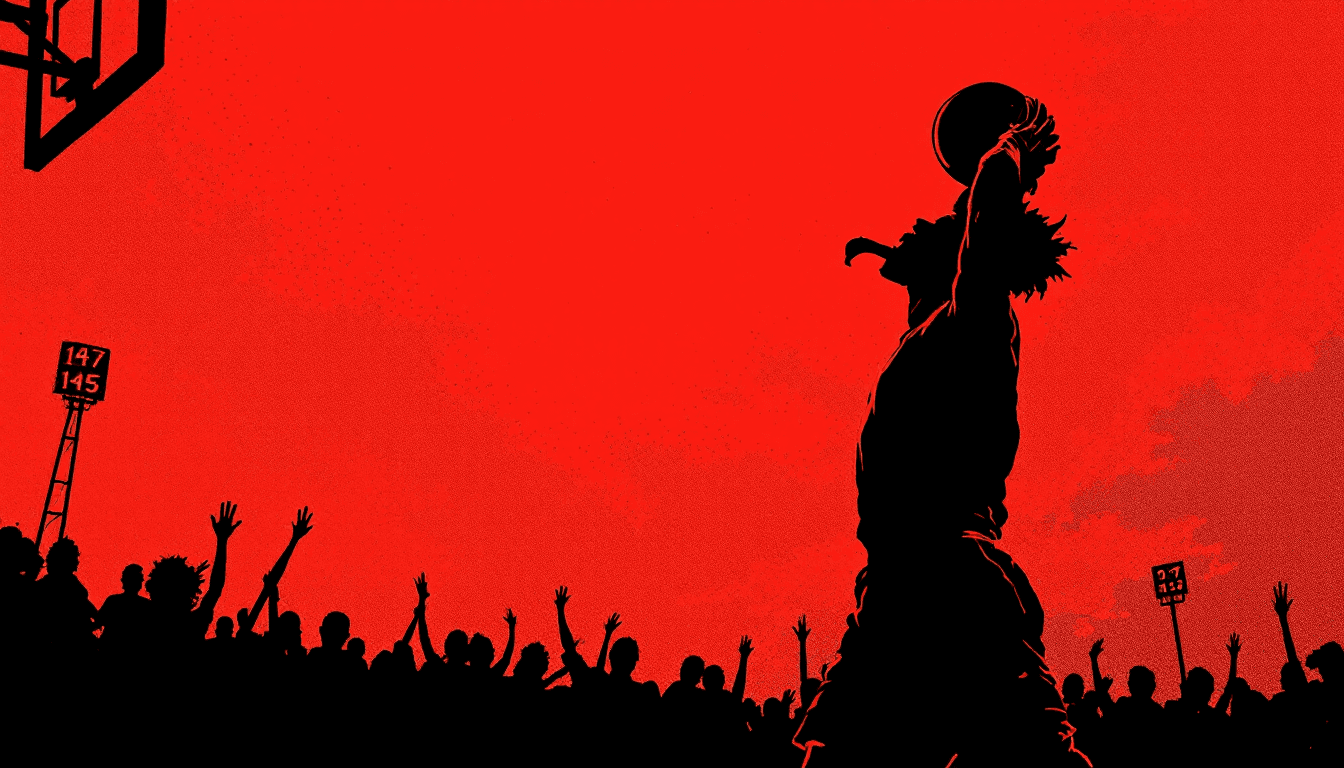
The cultural ceiling of the event. Jordan and Dominique Wilkins ran it back in Chicago for the 1988 final after Wilkins had beaten him in Indianapolis three years earlier, and what unfolded is still the most-watched single round in dunk-contest history. Wilkins held a comfortable lead heading into the fourth and final dunk, but his closing two-handed windmill drew only a 45 from the hometown judges — a score Jordan himself would later say he'd have rated a 49 or 50. That opening left Jordan needing a perfect 50 to win, and he answered by walking to the opposite baseline, sprinting the length of the floor, and taking off from the free-throw line — tongue out, knees tucked, body fully extended — for a one-handed flush. The judges gave him the 50. Final tally: Jordan 147, Wilkins 145. The dunk is a tribute to Dr. J's 1976 ABA original, but Jordan's gather, hang time, and silhouette became the iconic image of the event. Decades later, the Jumpman logo on Jordan Brand sneakers traces back to a different photo, but the cultural memory of "the free-throw line dunk" is this one. It is also the moment that made winning a dunk contest a tier of fame separate from anything else in basketball.
Vince Carter, 2000 — The Single Greatest Performance
If Jordan set the contest's ceiling, Carter blew through it. The 2000 contest in Oakland was the night Vinsanity became a national vocabulary word. Carter opened with a 360 windmill so violent the announcers immediately conceded the trophy. He followed with a reverse 360 windmill, then a between-the-legs alley-oop from cousin and Raptors teammate Tracy McGrady, where Carter caught the bounce pass mid-stride, swung the ball under his right leg, and slammed it through with such force that he turned to the camera and signaled "it's over." The fourth dunk is the one frozen on every highlight reel: a routine cock-back slam that became iconic when Carter thrust his entire forearm through the rim and hung from his elbow — the "honey dip," now a verb. He won with a final score of 198 ahead of Steve Francis at 186 and McGrady at 176, but the raw numbers undersell it. Carter only used four of his attempts; he never had to dunk in the final round head-to-head because the deficit was unrecoverable. McGrady, in the same field, threw down a self-alley-oop spinning two-hander for a 50 and still finished a distant third. Every dunker since has been measured against this Saturday night.
Dominique Wilkins, 1985 and 1990 — The Power Standard
Wilkins is the only player to win the dunk contest twice in two different decades, and the "Human Highlight Film" nickname was earned mid-contest. In 1985 in Indianapolis, the Atlanta forward — fresh off a third-place finish in his rookie year — outdueled rookie Michael Jordan, posting a 47 in the final round on a baseline reverse to seal the win. Five years later in Miami he was back, this time edging Sacramento's Kenny Smith in the final after fending off Scottie Pippen and 1989 champion Kenny Walker in the preliminaries. The 1990 final featured his signature two-handed windmill — a full-body, weight-of-the-rim, end-of-discussion power slam. Wilkins's career stack of titles, runner-up finishes, and contested losses (1988 included) is the strongest résumé any single dunker has ever assembled in the event. The conversation about renaming the dunk-contest trophy after him isn't a fan service campaign — it's a legitimate proposal that surfaces every All-Star Weekend.
Zach LaVine vs. Aaron Gordon, 2016 — The Best Final Ever
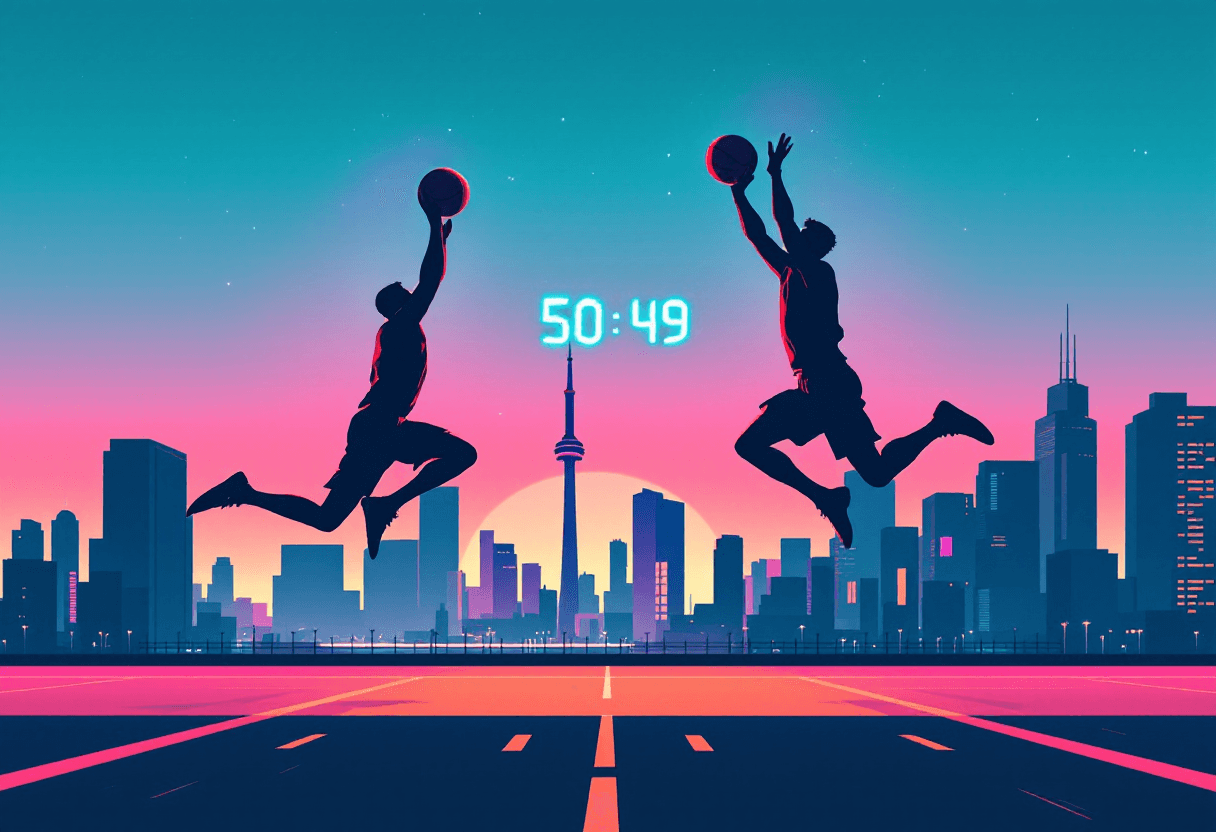
The night the 2016 contest in Toronto unfolded, the consensus was instant: this was the greatest dunk contest final since 1988, and quite possibly better. LaVine and Gordon went stride for stride through the standard rounds, both producing five 50-point dunks each by some tallies, then went to overtime tied. Gordon's centerpiece is the dunk that gets replayed every February: he took the ball from Magic mascot Stuff while seated on Stuff's shoulders, passed the ball under both of his own legs while still in the air, and finished one-handed in a pike position. Four judges gave it 10s. Shaq dropped a 9 — the only reason it scored a 49 instead of a 50, and the only mathematical reason Gordon didn't win the contest outright. After two ties through the regulation final, LaVine ended it on the second tiebreaker by sprinting from the opposite baseline and throwing down a between-the-legs dunk from the free-throw line — a move he had never attempted before, suggested by fellow contestant Will Barton in the tunnel. LaVine became just the fourth player ever to repeat as champion, joining Jordan, Jason Richardson, and Nate Robinson. The Gordon snub is the modern era's "Wilkins in 1988."
Spud Webb, 1986 — Five-Foot-Seven and Perfect
The contest's greatest underdog story, full stop. Webb stood 5'7" — listed generously — and entered the 1986 contest as Atlanta's backup point guard, dunking in the same field as his teammate and reigning champion Dominique Wilkins. The script wrote itself: Spud would do a couple of cute dunks, get cheered for the height of his vertical, and bow out to Nique. Instead, Webb scored a perfect 50 on his first final-round dunk — a 360-degree one-handed tomahawk — and then scored another 50 on his closer. Wilkins's final attempt scored a 48, and the 6'8" two-time All-Star found himself losing his own trophy to a teammate the league hadn't taken seriously coming in. Webb's win remains the canonical underdog dunk-contest story, the one used to convince every smaller guard that the event isn't strictly a giants' game.
Isaiah Rider, 1994 — The East Bay Funk Dunk
The defining dunk of the early-90s contest. Rider, the Timberwolves rookie, had told reporters on draft day that he'd win the contest as soon as he got to All-Star Weekend, and he backed it up in Minneapolis with a single dunk that stopped the building. He started at the right baseline, took three hard dribbles, gathered, switched the ball from his right to his left hand, then passed it under his right leg back to his right hand mid-flight before throwing down a tomahawk slam. Charles Barkley, courtside, was caught on a hot mic shouting that it was the best dunk he'd ever seen. The "East Bay Funk Dunk" — named for Rider's California roots — became the template for between-the-legs creativity, and every variation that followed (Richardson's reverse, LaVine's free-throw line version) owes a measurable debt to this attempt.
Jason Richardson, 2002 and 2003 — Back-to-Back
Richardson is the rare dunker who won the contest twice in a row in the post-Jordan era, joining Jordan (1987, 1988) and later LaVine (2015, 2016) and Robinson (across non-consecutive titles) as repeat winners. The 2002 trophy was a coming-out party for the Warriors rookie. The 2003 sequel produced one of the most copied dunks of the modern era: standing on the baseline, Richardson bounced the ball off the floor, caught it on the way up, swung it between his legs, and finished a one-handed reverse — a between-the-legs reverse on a self-bounce, which had simply never been seen in the contest. The judges scored it a 50. Richardson himself has admitted he could only complete the dunk that one time on the night that mattered; he attempted it a dozen times since and never hit it again. The 2003 final dunk is one of the most influential single attempts in the contest's history.
Nate Robinson, 2009 — Krypto-Nate over Superman
Robinson's three-title résumé (2006, 2009, 2010) made him the first three-time dunk contest champion, but the night that put him in the canon was 2009. The setup: defending champion Dwight Howard had won the 2008 contest as "Superman," cape and all. Robinson, all 5'9" of him, showed up in 2009 head-to-toe in green as "Krypto-Nate," with custom Nike Foamposite Lites color-matched to the bit. Then he stood Howard upright at the rim and leapt clean over him for a one-handed slam — height difference roughly 14 inches, narrative difference incalculable. The crowd lost it. Robinson edged Howard 52% to 48% in the fan-vote final. The dunk lives on as the gold-standard example of how to weaponize a costume in the event, and Howard's gracious loss made him the most beloved runner-up of the modern era. Robinson would go on to win the 2010 title as well, the first three-peat champion in event history.
Blake Griffin, 2011 — Over the Kia
The most successfully staged dunk in contest history. The 2011 contest in Los Angeles was Griffin's All-Star Weekend coronation as the Clippers rookie scoring 22 a night and dominating SportsCenter every other morning. For the final he had Baron Davis crouched in the sunroof of a Kia Optima at the free-throw line, ready to feed him a pass. Griffin sprinted from the baseline, took off in front of the car, caught the toss from Davis through the sunroof, and threw down a two-handed slam while the Crenshaw Select Choir performed "I Believe I Can Fly" at midcourt. The whole production was sponsor-driven — the NBA pushed him toward the Kia after he asked about jumping over Davis's vintage Cadillac, and the rookie had to come in Thursday night to rehearse clearing the hood — but the execution was unforgettable. Griffin beat JaVale McGee in the head-to-head final. The Kia dunk turned into one of the contest's most enduring cultural moments, parodied and referenced for the next decade.
Dee Brown, 1991 — The No-Look Pump
A rare case where the celebration matched the dunk. The Celtics rookie Dee Brown showed up to the 1991 contest in Charlotte wearing the brand-new Reebok Omni Zone Pump sneakers, and at the start of each dunk he leaned down and pumped up the tongue — a move Reebok hadn't even asked him to do. By the final round the entire arena was in on the act. Brown sealed the trophy with a dunk that became his signature: cocking the ball back, then bringing his right forearm across his face to cover his eyes mid-flight before finishing the slam. The no-look pump dunk wasn't physically the most demanding attempt of the night, but the theater was airtight, and Reebok bought a USA Today full-page ad of the photo the following Monday. It's one of the very few contest moments where the sneakers became a permanent character in the story.
Brent Barry, 1996 — Tribute to Dr. J
The 1996 contest in San Antonio was won by Brent Barry, the Clippers rookie son of Hall of Famer Rick Barry, in one of the most underrated performances of the 90s. Barry's signature move was a free-throw line takeoff in homage to Julius Erving — performed once with his warmup jacket still on for his first-round capper, and twice again in the final round. The dunks weren't the most acrobatic of the decade, but the throwback styling was deliberate, and the rookie's bounce surprised a field that expected him to be the runt of the litter against names like Michael Finley, Greg Minor, and Doug Christie. Barry's career arc — 14 NBA seasons, two championships, a long second life as a broadcaster — has overshadowed the dunk title, but in 1996 he was the rookie who pulled off a Dr. J homage well enough to win a trophy with it.
Larry Nance, 1984 — The Original Champion
The modern contest started here. Phoenix's Larry Nance won the inaugural All-Star Slam Dunk Contest in Denver in 1984, defeating Julius Erving — the man who had won the ABA's original 1976 contest — in the final round. Nance's signature dunk was a two-ball windmill, throwing down two basketballs in a single motion, one in each hand. The field that night was a who's who of early-80s leapers: Dominique Wilkins, Clyde Drexler, Michael Cooper, Darrell Griffith, Ralph Sampson, Edgar Jones, and Orlando Woolridge all joined Nance and Dr. J. Wilkins and Griffith fell in the semis. Erving missed a dunk in the final, opening the door for Nance to seal the upset. He doesn't get the same nostalgic billing as Jordan or Carter, but the modern lineage of the event begins with the player nicknamed "the Other Lefty" pulling off the two-ball windmill in front of a Denver crowd that didn't yet know the contest would become an annual centerpiece.
What Makes a Great Dunk Contest Performance
Read the list end-to-end and a few patterns emerge. The greatest performances combined two things: an original dunk no one had seen before and a closing moment that left the result beyond dispute. Jordan's free-throw line, Carter's elbow-in-rim, Richardson's between-the-legs reverse, Gordon's under-the-legs over Stuff — these are the moments that define each contest because they introduced a new vocabulary. Second, the best contests have been head-to-head duels, not solo showcases. Jordan vs. Wilkins in 1988, LaVine vs. Gordon in 2016, Spud Webb vs. Wilkins in 1986, Richardson vs. Mason in 2003 — the contest is at its peak when two dunkers are escalating each other in real time, and at its weakest when one dunker laps the field. Third, theatrics matter as much as athleticism. Dee Brown's pump, Robinson's costume, Griffin's choir, Carter's "it's over" gesture — the contest rewards performers, not just leapers. The fact that all of these moments have been verified, replayed, and re-litigated for decades is the proof that the event still matters in a way few All-Star Saturday traditions do.
Related Reading
- The Shortest NBA Players Who Made an Impact
- How International Players Transformed the NBA
- NBA Rookies Who Changed the Game Immediately
- The Three-Point Revolution: How the NBA Changed Forever
The dunk contest's greatest moments come from every era of NBA history — names like Jordan, Wilkins, Carter, and LaVine all show up in NBA trivia constantly. Test your basketball memory with our daily Who Am I? quiz, where the mystery player hides behind era-spanning clues. Or face off against the dunkers themselves on our NBA Bingo board, which pulls from every All-Star roster in league history.